Home/Automated QA / QC/MetraSCAN-R Series

Robotic 3D Scanning Systems for Automated Quality Control

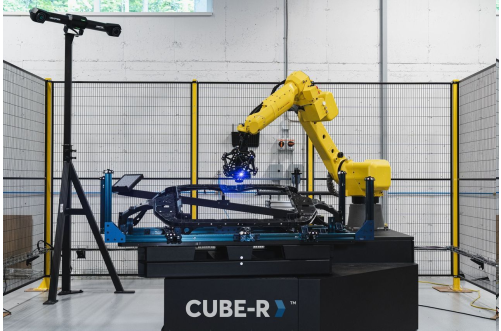
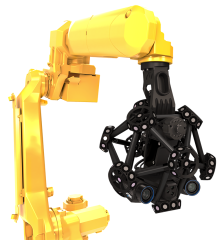
The MetraSCAN R-Series delivers automated, metrology-grade 3D inspection solutions for high-speed manufacturing environments. Designed for robotic integration and inline quality control, the platform supports scalable automated inspection workflows through solutions like CUBE-R and MetraSCAN-R BLACK™ | Elite.
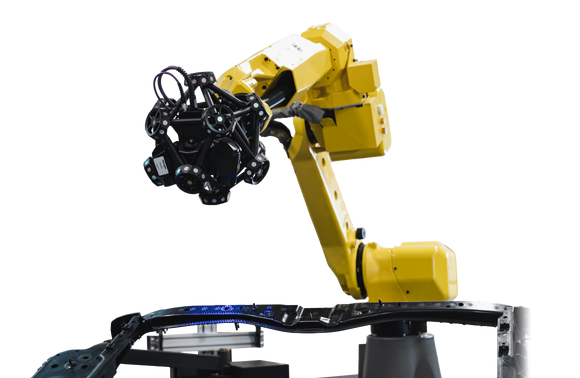
HandySCAN 3D Black Series in use

About the MetraSCAN R-Series Platform

The MetraSCAN R-Series is a robotic 3D scanning platform engineered for automated quality control and inline inspection workflows. Built for high-speed production environments, it combines optical metrology, robotic automation, and real-time inspection capabilities to improve manufacturing consistency and reduce manual inspection time.

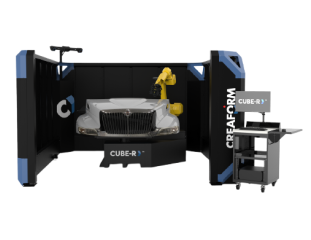
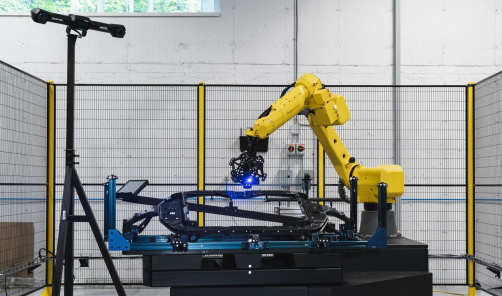
The platform supports multiple automated inspection configurations, including standalone robotic integration and fully enclosed automated inspection cells like CUBE-R. This flexibility allows manufacturers to scale inspection workflows based on production requirements and factory environments.
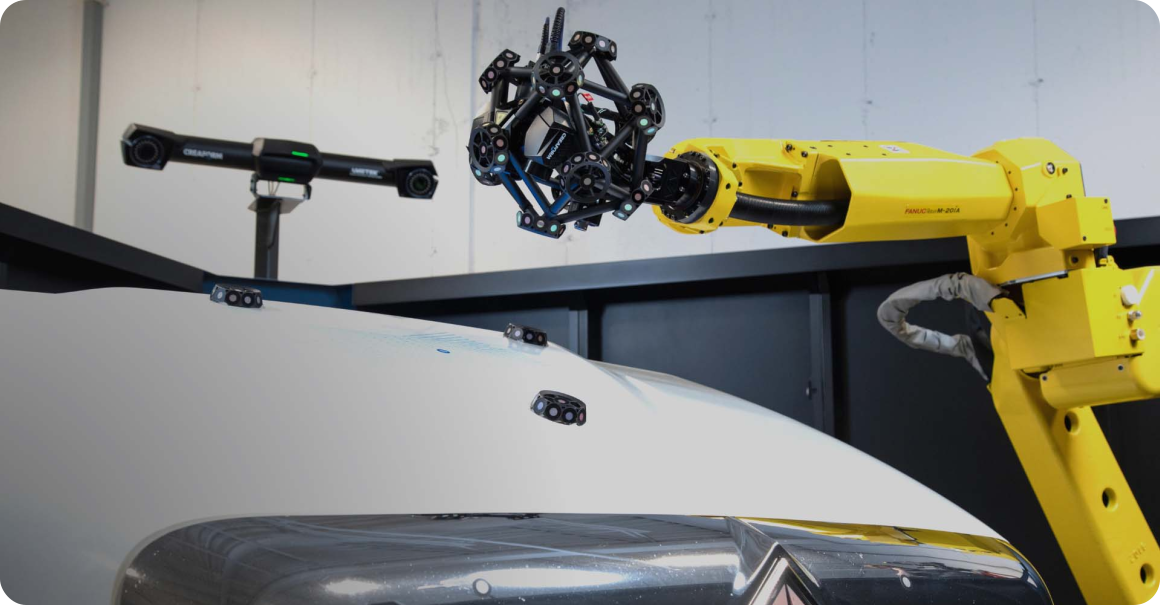
Series Video Overview

MetraSCAN R-Series in Action

MetraSCAN R-Series in Action

See how robotic 3D scanning systems deliver high-speed, repeatable inspection in real production environments..

Product Carousel Background

Why Choose the MetraSCAN-R Series

High-Speed Inline Inspection

High-Speed Inline Inspection

Capture accurate part data directly within automated production line workflows.
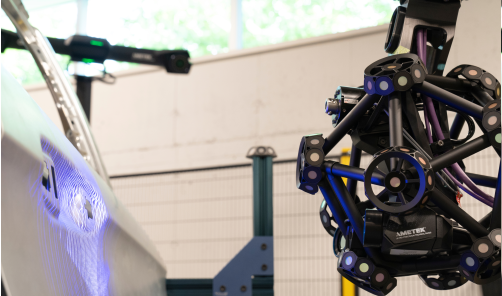
Robotic Integration Ready

Robotic Integration Ready

Integrates with industrial robots for repeatable automated scanning operations.
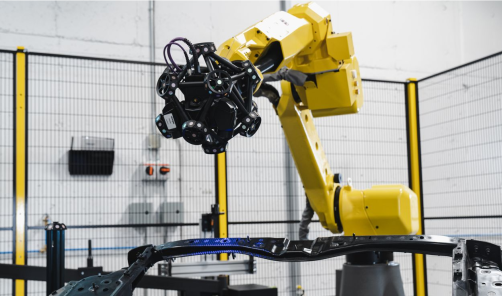
Scalable Automated Workflows

Scalable Automated Workflows

Supports low-volume validation and high-volume production inspection needs.
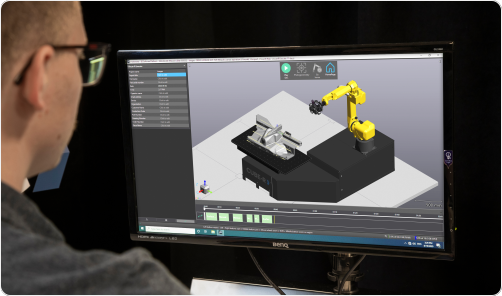
Metrology-Grade Accuracy

Metrology-Grade Accuracy

Delivers precise, repeatable 3D measurements for industrial QA applications.

Applications & Use Cases

Automated QA/QC systems support high-speed inspection across production environments, ensuring consistent quality and reducing manufacturing defects.
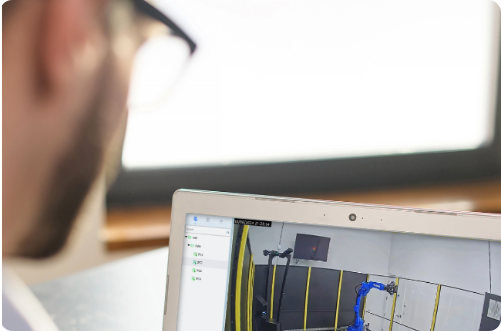
PRODUCT DEVELOPMENT & INLINE INSPECTION

PRODUCT DEVELOPMENT & INLINE INSPECTION

Robotic 3D Scanning for Inline Quality Control

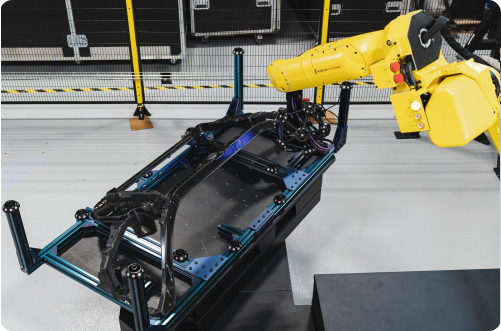
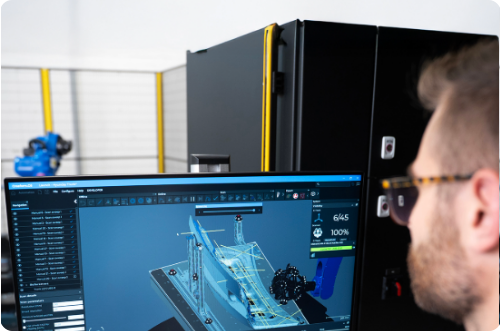
Automated 3D scanning systems like CUBE-R enable manufacturers to bring metrology-grade inspection directly into the production line, eliminating the traditional separation between manufacturing and quality control. Instead of removing parts for manual inspection or offline measurement, robotic scanning systems capture precise 3D data in real time as components move through production.

By integrating scanning technology with robotic automation, manufacturers can continuously inspect parts without interrupting workflow or slowing down production cycles. This real-time data acquisition allows for immediate detection of dimensional deviations, surface inconsistencies, and assembly misalignments, ensuring that quality issues are identified at the earliest possible stage.

The system delivers highly repeatable and traceable results, which is critical for industries that require strict compliance with quality standards. Automated inspection cycles reduce dependency on manual processes, minimize human error, and provide consistent measurement accuracy across every part produced. As a result, manufacturers can significantly reduce scrap, optimize production efficiency, and maintain a higher level of product quality.
HIGH-VOLUME MANUFACTURING

HIGH-VOLUME MANUFACTURING

Automated Inspection for Mass Production

In high-volume manufacturing environments, maintaining consistent quality across thousands or even millions of parts is a major operational challenge. Traditional inspection methods often rely on sampling or manual checks, which can lead to inconsistencies, missed defects, and increased production risks. Automated QA/QC systems address these challenges by enabling continuous, full-scale inspection of parts at production speed.

CUBE-R systems are designed to handle large production volumes by combining robotic precision with high-speed 3D scanning. This allows every part to be inspected with the same level of accuracy and consistency, ensuring uniform quality across batches. Automated workflows reduce the need for human intervention, minimizing variability and eliminating bottlenecks in the inspection process.

Additionally, the system captures and stores inspection data for each part, providing valuable insights into production trends and performance. This data-driven approach allows manufacturers to identify recurring issues, optimize processes, and improve overall operational efficiency. By implementing automated inspection, companies can achieve higher throughput, reduce waste, and maintain strict quality standards without compromising production speed.

AUTOMOTIVE MANUFACTURING

AUTOMOTIVE MANUFACTURING

Production Line Inspection for Automotive Components

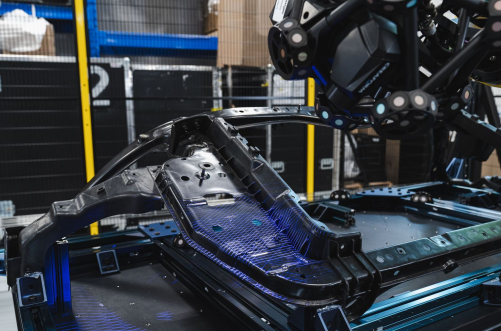
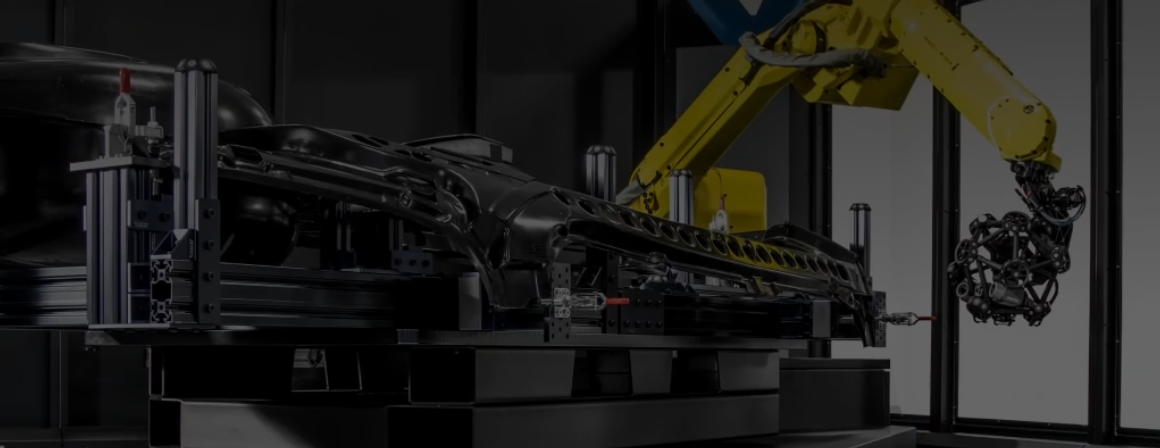
Automotive manufacturing requires precise inspection of complex components such as body panels, chassis structures, and assemblies, all within fast-paced production environments. Ensuring dimensional accuracy and proper alignment is critical to vehicle performance, safety, and overall quality. Automated 3D scanning systems enable manufacturers to perform these inspections directly on the production line without disrupting workflow.

By integrating robotic scanning systems into automotive assembly processes, manufacturers can capture high-resolution 3D data in real time, verifying that each component meets design specifications. This enables immediate detection of defects such as misalignments, deformations, or surface inconsistencies, allowing corrective actions to be taken before defects propagate further down the line.

The ability to scan reflective surfaces, complex geometries, and large assemblies makes these systems particularly effective for automotive applications. Automated inspection reduces reliance on manual quality checks, improves repeatability, and enhances overall production efficiency. As a result, manufacturers can reduce rework costs, improve product reliability, and maintain consistent quality across all vehicles produced.

AEROSPACE & PRECISION ENGINEERING

AEROSPACE & PRECISION ENGINEERING

Aerospace Component Validation & Compliance

Aerospace manufacturing demands the highest levels of precision, traceability, and compliance with strict regulatory standards. Components used in aerospace applications often feature complex geometries and tight tolerances, requiring advanced inspection methods to ensure quality and safety. Automated 3D inspection systems provide the accuracy and reliability needed to meet these demanding requirements.

CUBE-R systems enable detailed inspection of intricate aerospace components by capturing high-resolution 3D measurement data with exceptional accuracy. These systems ensure that each part conforms to design specifications and meets industry standards, reducing the risk of failure in critical applications.

Automated workflows improve efficiency by reducing inspection time while maintaining consistent results across multiple parts. Additionally, the system generates comprehensive inspection reports and data records, supporting full traceability and compliance with certification requirements. This allows aerospace manufacturers to streamline quality assurance processes, maintain regulatory compliance, and deliver high-performance components with confidence.

INDUSTRIAL EQUIPMENT & HEAVY MACHINERY

INDUSTRIAL EQUIPMENT & HEAVY MACHINERY

Inspection of Large and Complex Industrial Components

Large-scale industrial components, such as heavy machinery parts, tooling systems, and structural assemblies, present unique challenges for inspection due to their size, complexity, and weight. Manual inspection methods can be time-consuming, inconsistent, and difficult to scale. Automated robotic scanning systems provide an efficient and reliable solution for capturing accurate 3D data from these complex components.

CUBE-R systems are capable of handling large volumes and scanning complex geometries with high precision, making them ideal for industrial inspection applications. Robotic automation ensures consistent positioning and movement during scanning, resulting in repeatable and reliable measurement results.

By automating the inspection process, manufacturers can significantly reduce inspection time while improving accuracy and consistency. This enables faster production cycles, better quality control, and improved operational efficiency. The system also supports data-driven decision-making by providing detailed insights into component performance, helping manufacturers maintain high standards of quality across large and complex products.

3D Scanning Background

Downloads & Resources

Access detailed technical documentation and product information for the MetraSCAN R-Series automated inspection system.

Available Models in This Series

MetraSCAN 3D-R Automated Scanner

CREAFORM

MetraSCAN 3D-R

Quote Request
view details