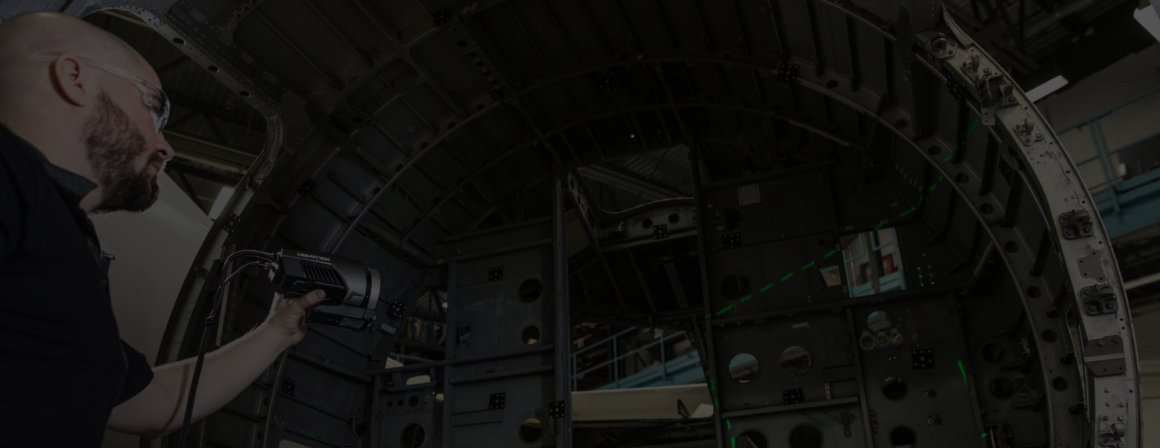
MaxSHOT 3D delivers highly accurate optical coordinate measurements for large-scale industrial inspection and alignment workflows. Designed for photogrammetry-based metrology, it enables precise positioning and measurement of large assemblies, complex structures, and extensive manufacturing setups.
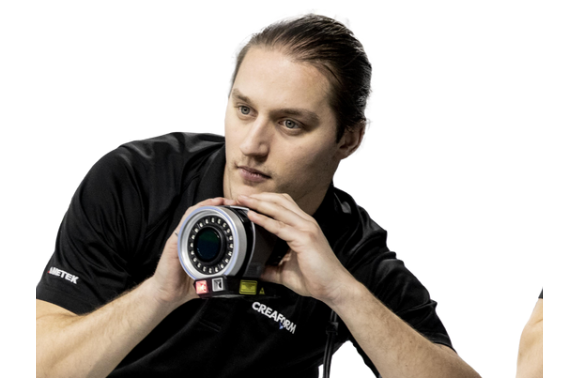
MaxSHOT 3D is an optical coordinate measurement system engineered for large-scale metrology applications where accuracy and positioning precision are critical. Using advanced photogrammetry technology, it captures highly accurate reference coordinates across large objects and industrial environments.
Designed to improve measurement accuracy over long distances, MaxSHOT 3D supports inspection, alignment, and validation workflows in industries such as aerospace, transportation, energy, and heavy manufacturing. It is ideal for applications involving large assemblies, tooling systems, and structural components where traditional measurement methods become inefficient.
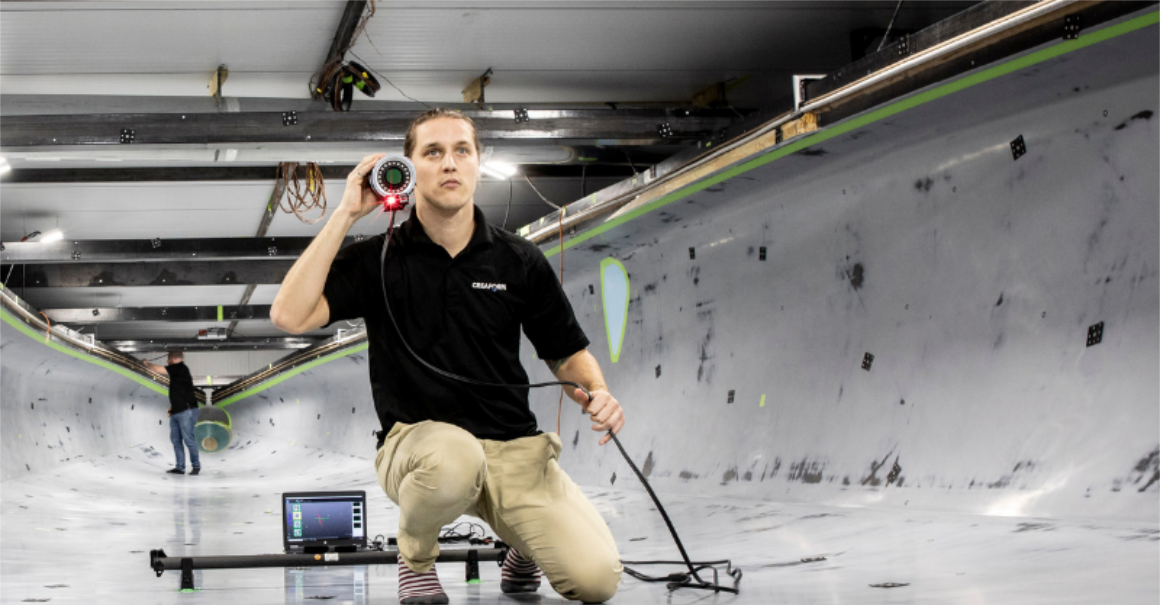
See how optical coordinate measurement systems deliver high-accuracy positioning and large-scale industrial metrology workflows.

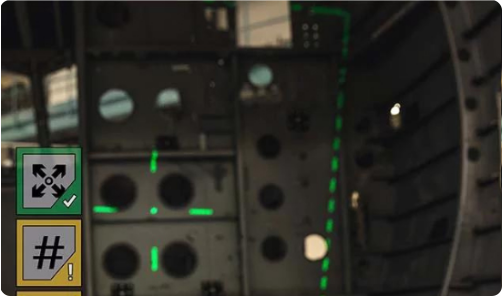
Deliver precise coordinate measurements across large industrial assemblies and environments.
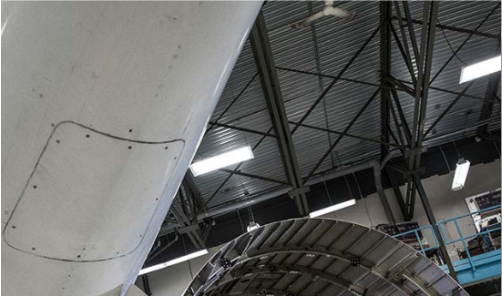
Measure large components and extensive assemblies with improved accuracy and efficiency.
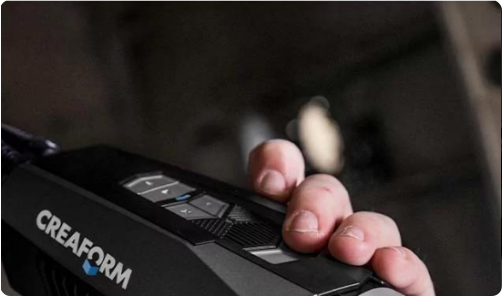
Capture reliable coordinate data using optical measurement and photogrammetry workflows.
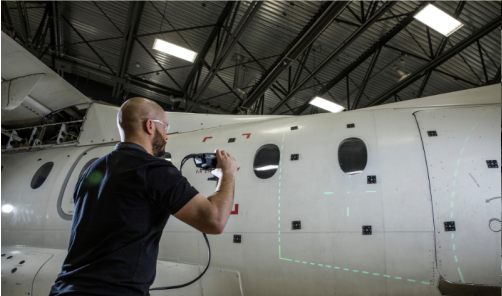
Built for demanding industrial environments requiring large-scale measurement precision.
Optical coordinate measurement systems support large-scale metrology, alignment, and validation workflows across advanced manufacturing industries.
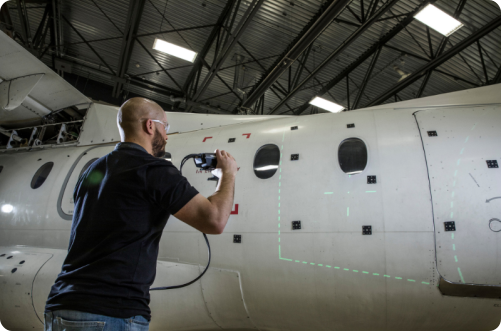
Dimensional quality control (QC) is a process that measures the dimensions of manufactured parts to ensure that they adhere to a defined set of quality criteria and match customers’ requirements. Quality assurance (QA), on the other hand, consists of a set of procedures that prevent mistakes and defects in the different steps of the manufacturing process in order to avoid non-compliance when delivering parts to customers.
As QC managers, you have the delicate task of ensuring—even improving—the quality of the manufactured parts by applying effective controls performed with reliable, fast, and easy-to-use measuring equipment. You are also responsible for testing and validating the true performance of these instruments. Therefore, equipment unavailability, inefficiency, and limitations are obstacles to your work performance.
As QA engineers, you are in charge of investigating the problems raised by QC and production, performing the root cause analysis (often under pressure), and implementing corrective actions quickly to limit downtime. Through this process, you will also look for ways to improve the manufacturing process while minimizing production costs and lead time.
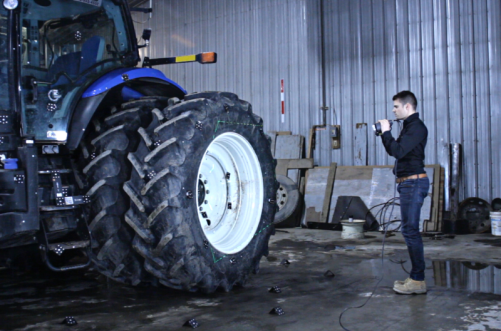
Access detailed technical documentation and product information for the MaxSHOT 3D optical coordinate measurement system.


