Compare a handheld 3D scanner with fixed systems for flexibility, repeatability, setup time, accuracy, 3D printing, reverse engineering, and production inspection.
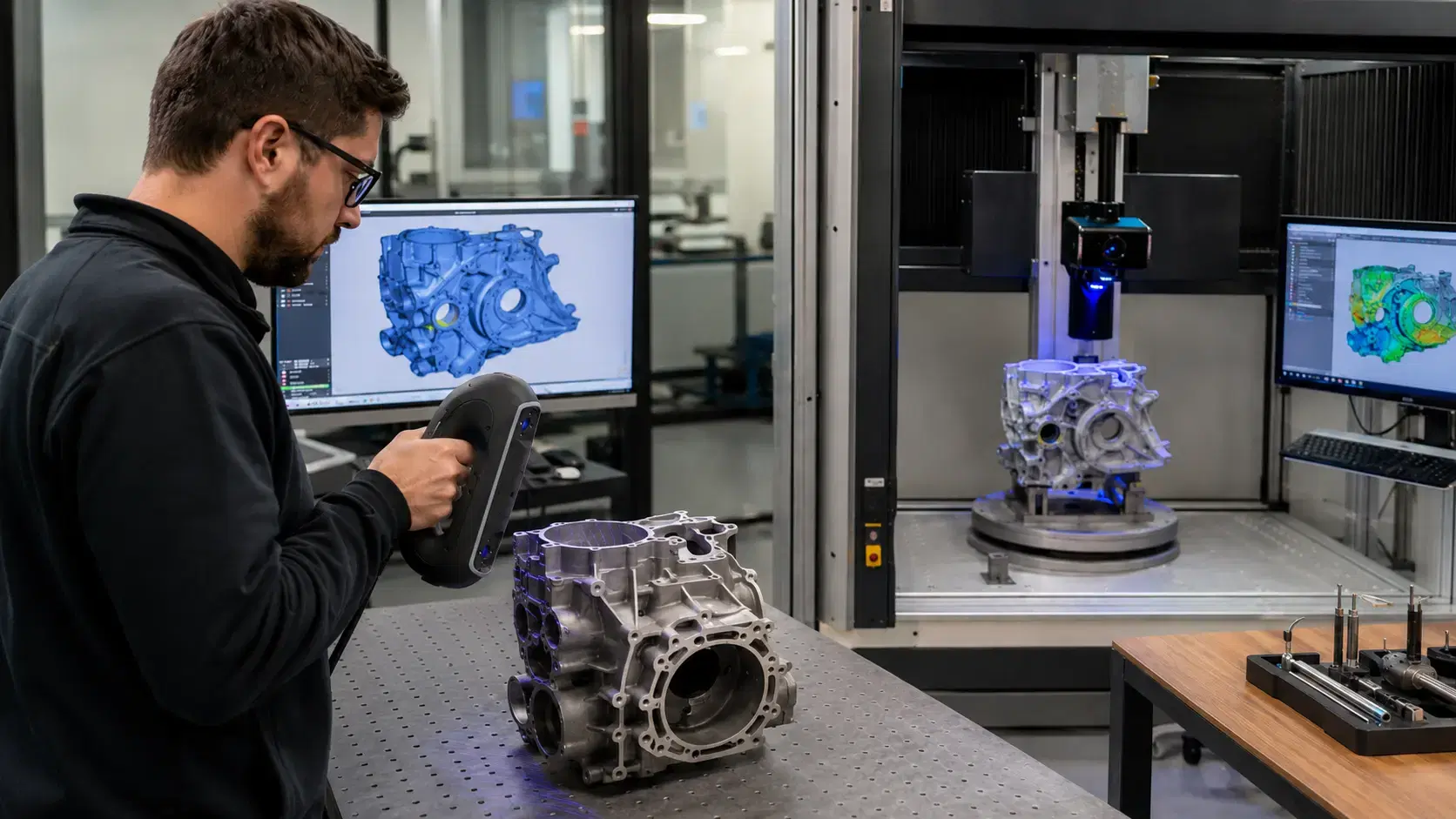
Choosing between a handheld 3d scanner and a fixed scanning system is really a question about how your team measures parts.
Some manufacturers need flexibility. They scan parts on carts, benches, fixtures, machines, or production floors. Others need repeatable automated inspection in one controlled cell. Both approaches can work, but they serve different workflows.
Understanding the difference helps engineers, quality teams, and product developers choose scanning equipment that fits the part, tolerance, budget, and daily production reality.
A handheld 3D scanner is a portable device that an operator moves around a physical object.
The scanner captures surface geometry from multiple angles while software builds digital data in real time. Depending on the model, it may use laser lines, structured light, optical tracking, targets, or natural geometry to maintain position.
Handheld 3d scanners are useful because the scanner can move to the part. This matters when the object is large, heavy, installed, fragile, or difficult to place inside a fixed inspection setup.
They are commonly used for reverse engineering, inspection, product development, tooling checks, repair, and digital documentation.
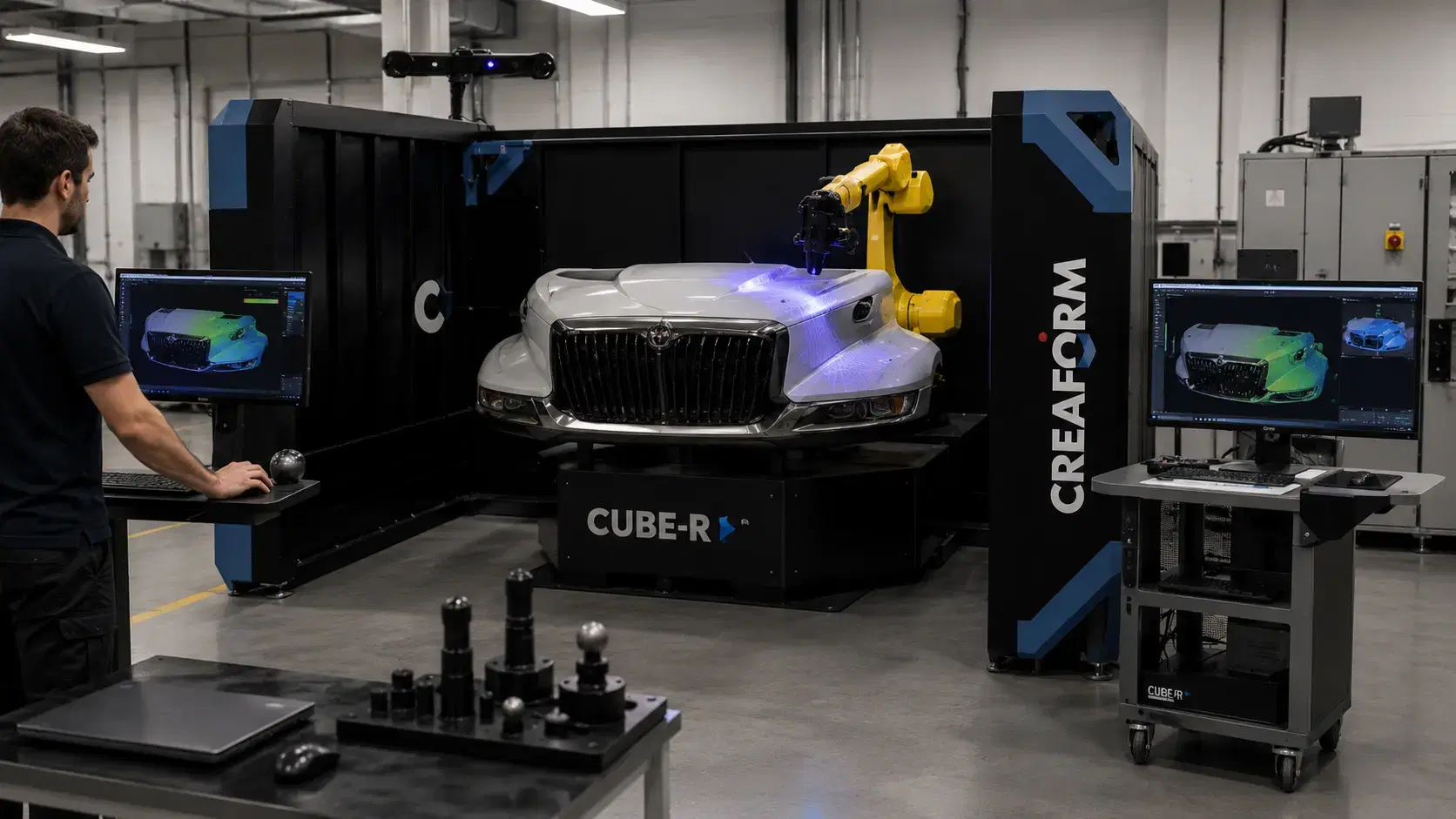
Fixed scanning systems usually keep the scanner, part, or both in a controlled position.
The system may include a robot, turntable, enclosure, fixture, automated scanner, or inspection cell. The goal is repeatability. Once the setup is built and programmed, the same scan routine can be repeated many times.
This can be powerful for production inspection where the same part is checked repeatedly. A fixed system can reduce operator variation and support faster routine checks after the workflow is approved.
The tradeoff is flexibility. Fixed systems often need more setup, floor space, fixtures, programming, and process planning.
The biggest difference is flexibility versus repeatability.
A handheld 3D scanner is better when parts change often. It can handle different sizes, shapes, projects, and work areas without rebuilding the entire setup.
A fixed system is better when the same measurement job repeats often. Once the cell is dialed in, it can scan similar parts consistently.
For a job shop, product development team, repair shop, or low-volume manufacturer, handheld scanning may fit better. For high-volume production with stable parts, fixed scanning may be worth the investment.
Handheld scanning often wins when setup time matters.
An operator can bring the scanner to a part, prepare the surface if needed, capture geometry, and review data quickly. This is helpful for urgent inspection, supplier samples, prototype reviews, and maintenance work.
Fixed scanning can be faster after the system is fully built, but only for the intended task. The first setup may take more time because fixtures, programs, safety requirements, and validation steps must be completed.
So the faster option depends on the job. For one part today, handheld may be faster. For thousands of similar parts, fixed automation may be faster.
Accuracy depends on more than scanner style.
The scanner model, calibration, surface condition, operator skill, tracking method, alignment, and software workflow all affect the result.
A high-quality handheld scanner can support professional inspection and reverse engineering when used correctly. A fixed system can improve repeatability because it controls motion, lighting, distance, and part positioning.
However, a fixed system is not automatically accurate. Poor fixturing, wrong alignment, dirty parts, or weak programming can still create bad data.
The best choice is the one that matches the tolerance and part conditions.
A handheld 3d scanner for 3d printing is useful when the goal is to turn a physical object into a printable digital model.
The scanner captures the shape, then software creates a mesh file such as STL or OBJ. That file can be cleaned, repaired, scaled, or modified before printing.
This is useful for custom parts, prototypes, replacement covers, art objects, ergonomic models, and product samples.
Fixed systems can also create print-ready data, but handheld scanning is often more practical for varied objects and one-off projects.
Start with your real workflow.
If your team handles many part types, changing projects, reverse engineering, or field work, handheld scanning is usually more practical.
If your team inspects the same part every shift and needs automated repeatability, a fixed system may be better.
Also consider training, software, space, fixtures, support, reporting needs, and future parts. The right scanner should solve today’s work without blocking tomorrow’s projects.
This makes planning easier when equipment budgets and deadlines are tight.
Yes, professional handheld scanners can be accurate when matched with the right part, setup, and workflow.
Often, yes. Fixed systems can support repeatable inspection for high-volume parts.
Yes. They are widely used to capture physical geometry for scan-to-CAD workflows.
Handheld scanning is often better for varied objects, prototypes, and custom print projects.
There is no single best scanning system for every manufacturer.
Handheld scanning gives flexibility, portability, and fast project setup. Fixed scanning gives repeatability, control, and automation for defined production tasks.
Dynamic 3D can help manufacturers compare handheld 3D scanner options, fixed inspection systems, reverse engineering workflows, and scan-to-CAD solutions based on real parts, tolerances, and production goals.
Expand your knowledge with additional resources designed to help engineers, manufacturers, and quality teams make more informed decisions.
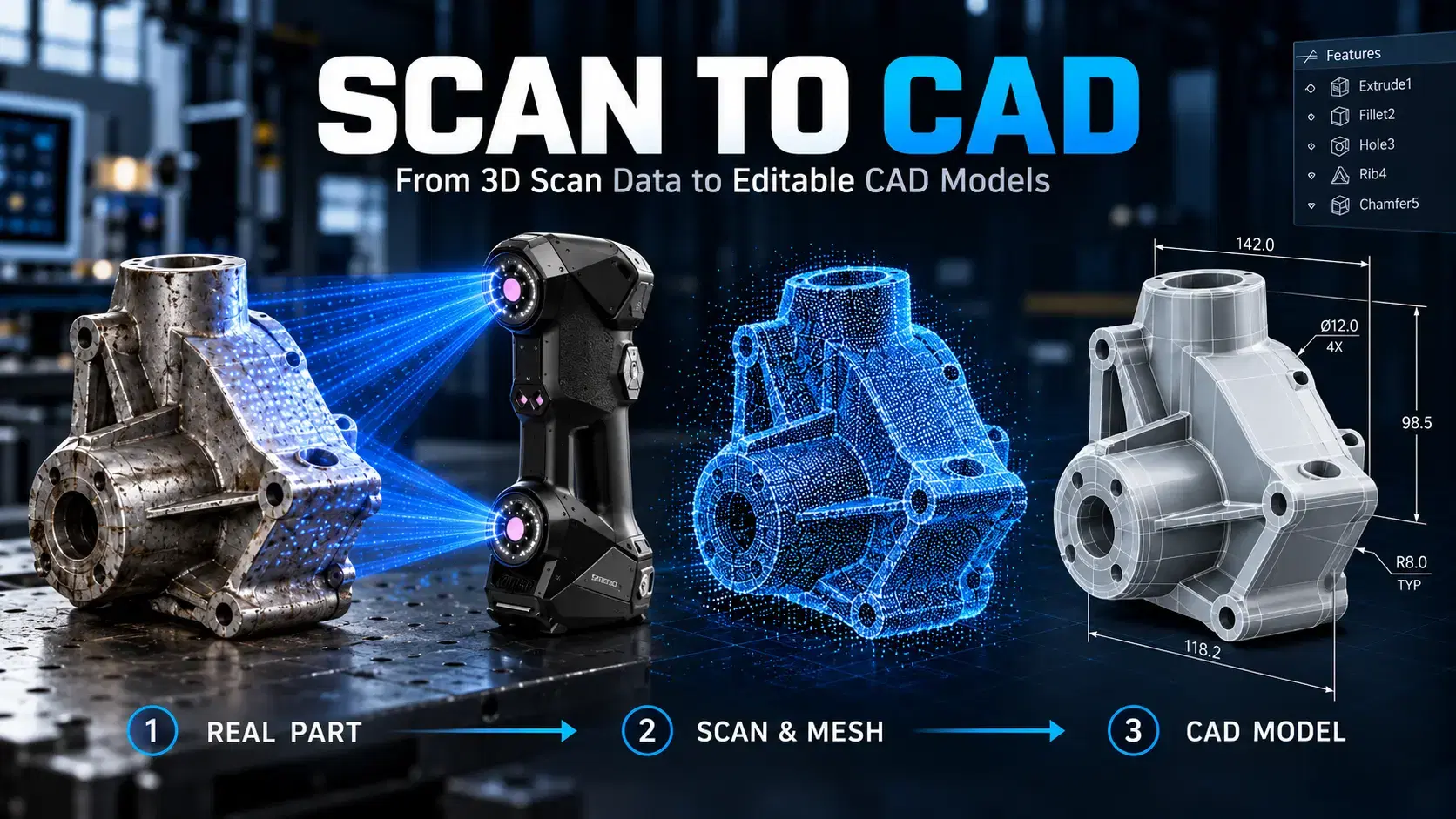

Learn how scan to CAD turns 3D scan data into editable CAD models using mesh cleanup, alignment, feature extraction, verification, and proper file export.

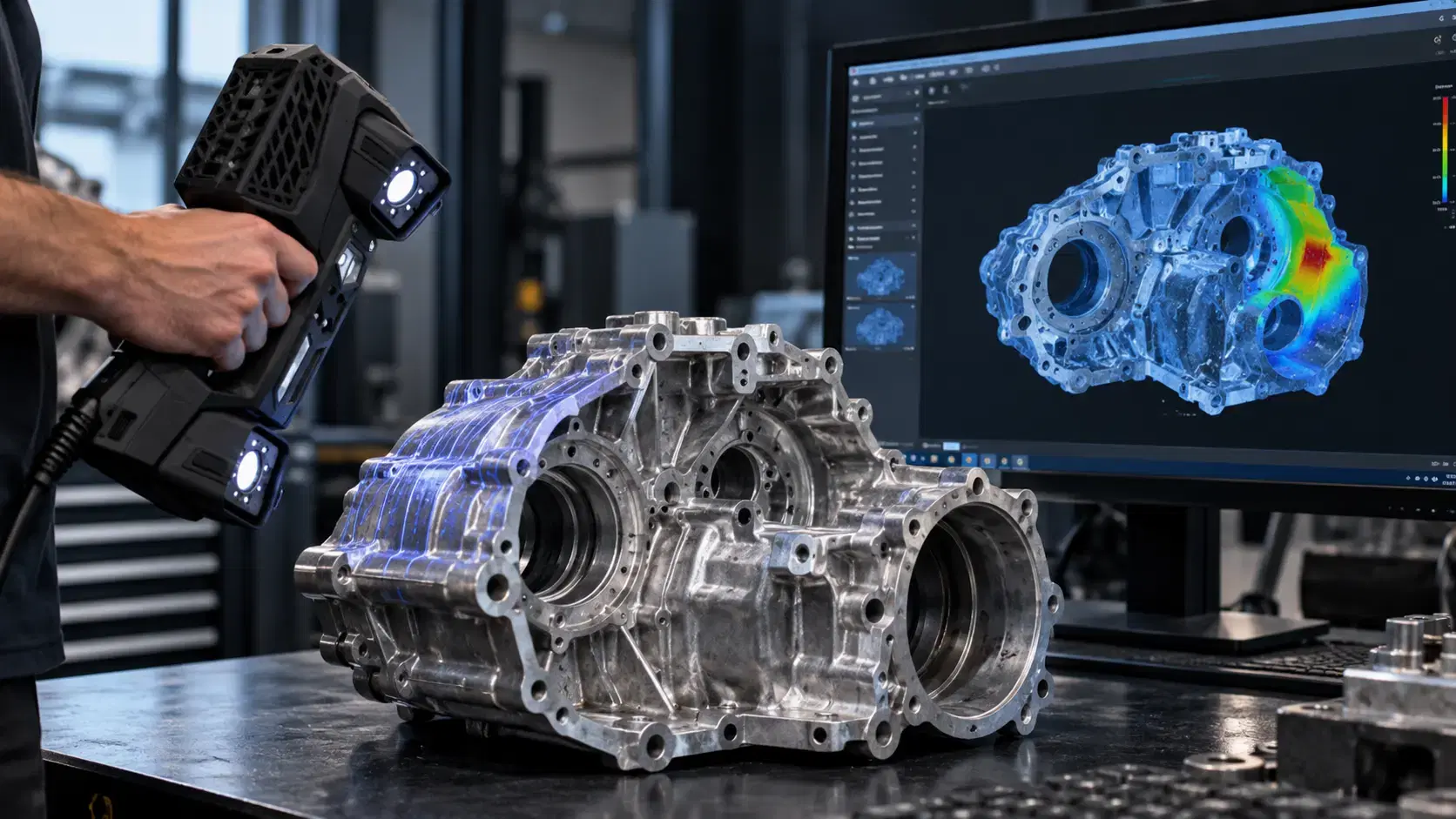
Learn how a three-dimensional scanner captures physical geometry, creates digital scan data, and supports inspection, reverse engineering, CAD, and manufacturing.
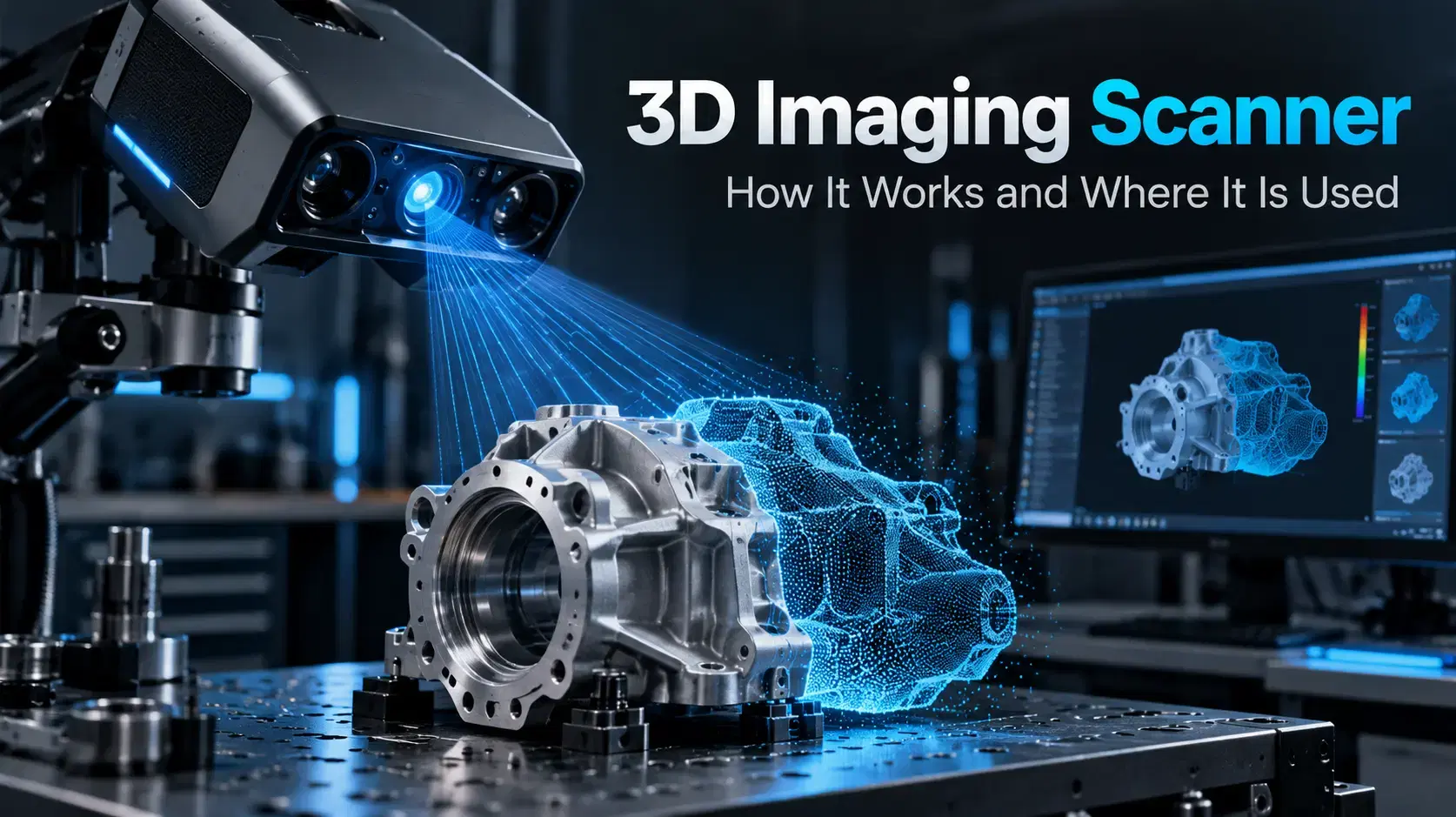
Learn how a 3D imaging scanner captures physical geometry, creates digital models, and supports inspection, reverse engineering, CAD, and industrial workflows.

Whether you're evaluating 3D scanners, inspection software, reverse engineering workflows, or CAD modeling services, our engineering team can help identify the best solution for your application.


